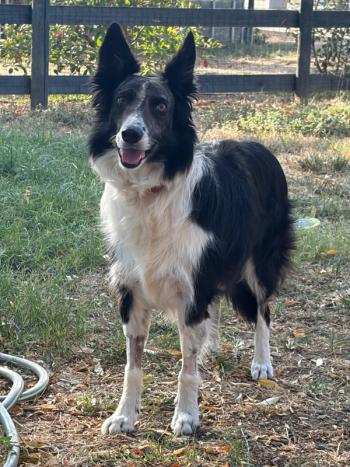
UC Davis veterinarians used 3 titanium miniplates and 16 screws to repair fractures of the skull, orbit, and midface in a 5-year-old dog named Tessa.
Veterinarians answer the call to serve animals in vulnerable regions.
Colleen Lambo, DVM, PhD, MS (General Practice); and Gemma Campling, MRCVS, are veterinarians with kindred spirits. Both veterinarians have dedicated countless hours to providing animal care in some of the world’s most vulnerable regions. Preventive medicine, emergency and critical care, wellness checkups, and assistance to pet owners in crisis are all part of their service work.
Campling is CEO and founder of Worldwide Vets, a nonprofit organization based in the United Kingdom. The group has a presence in Egypt, India, Thailand, Ukraine, Guatemala, Peru, Namibia, and Tanzania, according to Campling. Worldwide Vets also serves 2-week outreach missions, as needed, in regions affected by disasters, war, or other crises.
“We work in quite a few different countries [on] 5 continents. Most of that work is full time, providing free care for communities and animals,” Campling said in a dvm360 interview. “We get delegates from the [US] and from Europe…. We had 704 volunteers last year come out to join us, which is amazing. If it’s a permanent location, we employ local veterinarians.”
Lambo, a general practitioner through the veterinary relief platform Roo, is a volunteer with Worldwide Vets. She has served multiple missions with the organization to care for pets injured or displaced by the war in Ukraine and in Egypt, and has even spent 2 birthdays while volunteering. “I have gone back consistently, and I really enjoy that,” she told dvm360.
“Most veterinarians are in the field because we have such a deep compassion for animals. So when I know about conflicts or natural disasters that are impacting communities, that’s where I want to be. I want to help animals as much as I can,” Lambo said.1
Lambo described a case involving a malnourished dog that she and other volunteers nursed back to health. “We were working every angle we could…to get him healthy,” she said. “Thankfully, he is now, [and] I’ve been able to visit him a couple years in a row.”
Also a local volunteer with Texas A&M University’s Veterinary Emergency Team, Lambo assists various animal species. Her time with the group includes a 2023 deployment to the Texas panhandle during wildfires that caused burns and smoke inhalation to wildlife, livestock, and domestic animals.1 “The work is just a calling,” she said.
Likewise, Worldwide Vets was on the ground in California to assist in areas affected by wildfires and has served in other disasters. “Ukraine was initially a disaster response, but we just stayed, so it’s become a permanent location,” Campling said. Although the organization’s initial response in Ukraine was focused on tasks such as evacuating animals from areas on the war’s front lines and financially assisting horse owners with feed grants and transportation, the organization’s efforts have changed over the past 4 years, with vaccinations, deworming, and population control among the routine services.
“My hands-on work in Ukraine has primarily been with the spay and neuter initiative. We are really working on population control due to the exponential increase in the animals over there,” Lambo said.
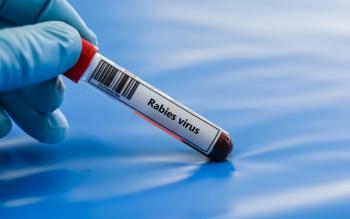
One Health initiatives are among the current priorities, and both Lambo and Campling expressed concern about rabies. “The human impact of the war is obviously huge, but you don’t often get a lot of people without a lot of animals. So, there is rabies in Ukraine, and a huge number of transmissible diseases that really put the human population at risk. A lot of our work [is] trying to look after communities. We’re trying to get rabies vaccinations out to stray dogs so that the people are safer, as well as the animals,” Campling said.
“We often see [that] people don’t want to move if they can’t move with their animal. For instance, if they are displaced, they’ve lost their income, or they’ve lost a partner to the war. For a lot of people, their animal is the only lifeline to sanity in a world that they remembered,” she added.
The care provided by Worldwide Vets is free for patients and their owners. “For people who are struggling financially, it’s a real help to know they can bring their animal in and have the care that the animal deserves, that maybe they’re struggling to afford,” Campling said.
Most of the animals seen around the world by the organization’s veterinary teams are dogs, cats, and working horses. However, some missions include working with more exotic and endangered animals, such as rhinoceroses. For example, the group specializes in conservation and dehorning, which uses a painless, humane procedure that relies on sedatives and precision equipment that does not harm the animal.2
Visit
References
about 1 month ago
Meet the 2026 Veterinary Heroes: Joanna Finstad, DVM, MS, DACVECCabout 1 month ago
Meet the 2026 Veterinary Heroes: Heather Duncan, DVM, DAVDCabout 1 month ago
Meet the 2026 Veterinary Heroes: David Brathwaiteabout 1 month ago
Meet the 2026 Veterinary Heroes: Julia Miller, DVM, DACVDabout 1 month ago
Meet the 2026 Veterinary Heroes: Ashley Newsomeabout 1 month ago
Meet the 2026 Veterinary Heroes: Craig Datz, DVM, MS, DABVP, DACVIMabout 2 months ago
Meet the 2026 Veterinary Heroes: Jane Park, DVM, MS, DACVS-SA