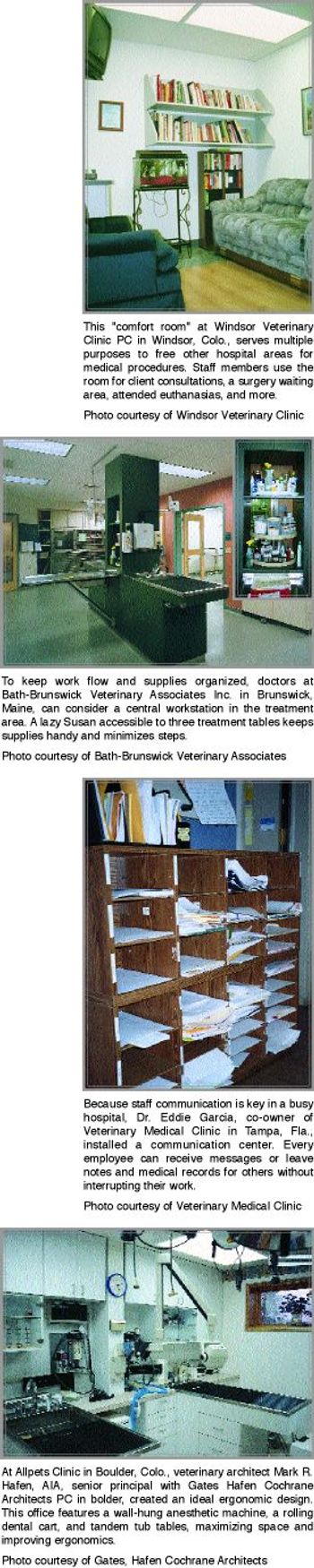
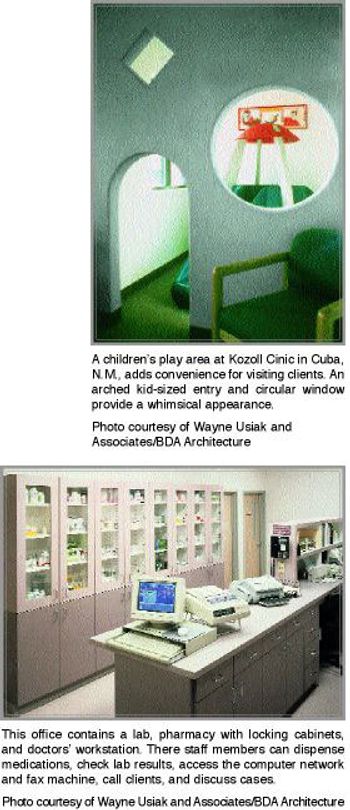
If your reception area seems dull, new light fixtures can provide a low-cost solution. Although most veterinary hospital waiting areas have plenty of light, the quality is often poor.

If your reception area seems dull, new light fixtures can provide a low-cost solution. Although most veterinary hospital waiting areas have plenty of light, the quality is often poor.

Q. I lease space in a strip mall that imposes strict regulations on signage. For instance, my sign must sit flush against the building and not stick up above the roof, I have to use muted colors, and it must say "Veterinary Hospital" instead of my clinic name. Without a distinct building and sign, how can I make my presence known?

Most veterinarians are used to client jokes about deducting the family pet on the personal tax return.

Even if you're planning to build a new, bigger facility, you need to make the most of your space. These tips from Tony L. Cochrane, AIA, a principal with Gates Hafen Cochrane Architects PC in Boulder, Colo., can help:

It is time to go to work. You have been in school for nearly eight years and within a few months you will receive your veterinary degree and become a licensed veterinarian. Naturally you are eager to find a job. After all, you have devoted most of your time and effort toward reaching this goal.

Q. After 23 years in the same location, my veterinary practice is landlocked. Parking space is almost nonexistent, and traffic is so heavy clients sometimes struggle to even enter the lot. My wife suggested we move into an area where housing is booming. But our practice is still growing where we are, and I don't want to move too far from this location. In a city with 80,000 people and nine other clinics, how far can I move without losing my client base?

Q. We're packed into our hospital like sardines in a can, but we can't afford to rebuild or completely renovate. How can I find more space without undergoing major construction?

Q. I lease space for my hospital but want to purchase some land and build a facility when my lease expires in three years. My Individual Retirement Account (IRA) contains enough money to cover the down payment on the land. Is this a wise use of my IRA funds?

Do veterinarians and staff members constantly trip over each other's feet at your practice? Or maybe you round corners with caution to avoid taking out unsuspecting clients. Even remodeling or expanding your facility may not fix the problem if you don't develop an efficient floor plan.

You're finally ready to build your dream hospital or expand your existing facility. For years, you've read design articles in Veterinary Economics and carefully studied every floor plan. You've also planned to hire an award-winning veterinary architect. But one of your clients is an architect, and you like her work.

If you come to work every day, park in back, and hurry in the staff entrance, you may be missing out on the little things that detract from clients' impressions of your facility. To identify areas where your practice falls short, look at your hospital the way pet owners do. Here's a guide:

Q. I want to move my veterinary practice from a strip-mall leasehold to an adjacent property that the mall owner recently bought to expand the shopping center. I can either rent a larger leasehold in the new shopping center or lease part of the land. Is it wise for me to lease the land while owning the freestanding building on it?

Q. When designing my practice, should I create separate entrances for grooming, boarding, and retail areas or have all clients enter through the main door?

When one McDonald's restaurant faced a space dilemma, the owner tore down a wall--and made the building smaller. This may seem like the wrong approach, but the squeeze forced employees to examine traffic flow and suggest improvements. With less space to work, the owner knew everyone would become more efficient.

At age 10, my friends and I thought we'd be driving flying cars by 2000. We never envisioned laptop computers, the Internet, or virtual reality. Now the flying car seems absurd, and computers are commonplace. There's a lesson here: When predicting the future, practicality always wins.

Q. I plan to build a new hospital, but I worry about devoting adequate time to the project without neglecting my practice. Does a building project affect revenue, and how can I best handle this time commitment?

Q. I plan to build a new hospital, but I worry about devoting adequate time to the project without neglecting my practice. Does a building project affect revenue, and how can I best handle this time commitment?

Designing an animal hospital means compromising between the practical and prophetic. It's easy to criticize early floor plans or older hospitals. But how could these architects have foreseen future treatment and service options? Veterinary hospitals are built to serve medical technology, and technology constantly evolves.

Q. I'm preparing to sign my first building lease but worry I might miss important details. What should I know before committing?

When selecting your veterinary hospital's site, a high-traffic road may not be your best option, says Larry Gates, a senior principal with Gates Hafen Cochrane Architects P.C. in Boulder, Colo. During the 1998 Veterinary Economics Hospital Design Conference in Kansas City, Mo., he showed attendees how to target a market niche and noted that while conventional wisdom suggests busy streets provide the best visibility, clients who can't easily reach your hospital will probably go elsewhere.

Blame fate for Dr. Robert C. Brown, director of Cherrydale Veterinary Clinic in Arlington, Va., bumping into architect and analyst E. John Knapp, AIA, from Oregon, Wis., at a national conference. Dr. Brown wanted to renovate his hospital to improve traffic flow.

Buying or starting a practice can be one of the most overwhelming moves of your veterinary career. But you don't have to experience it alone. These resources can help you create research that guarantees your new hospital's success.

Buying or starting a practice can be one of the most overwhelming moves of your veterinary career. But you don't have to experience it alone. These resources can help you create research that guarantees your new hospital's success.

Have you ever based an important decision on one person's opinion? Imagine not selling pet food because one client prefers buying it from a superstore. You won't benefit from retail sales--or any service--until you ask many clients. Consider a client survey before expanding or building a new facility. If you own a practice, give the survey to clients on arrival. If you're starting a practice from scratch, consider a mail or phone survey. Include these topics:

Many associates dream of a fixer-upper they can buy for nothing down and low payments, then turn it into a $1 million practice overnight. I hear an occasional success story, but most new owners experience something different.

Are you--and clients--getting bored staring at the same four walls every day? Maybe it's time to give your hospital a new look. If you're not ready to build a new facility, consider an inexpensive design innovation. You'll make your practice a fun, new place again. Choose from such simple projects as a canine agility course or kids' play area to breathe new life into your hospital.

The Americans with Disabilities Act (ADA) made discrimination based on physical disability illegal. The law was originally designed to eliminate employment discrimination, but it applies to public access as well. Any new facility, addition, or significant remodel built after Jan. 26, 1992, must conform to the ADA. The act specifies that second-floor offices, apartments, and conference rooms be accessible as well. While the following isn't an exhaustive list of ADA requirements, it does offer common compliance guidelines that can help prevent a lawsuit.

A recently hired associate brought in leftover inventory items from a previous practice. How much should I pay her for the inventory?