When December feels like a grind, a waterfront venue, 60-degree weather, and a top-tier education lineup may be just what your team needs to recharge.
What is COPAT, and how can it help dentistry patients in your clinic?
During his lecture at the 2026 Veterinary Meeting and Expo, Jan Bellows, DVM, DAVDC, DABVP, FAVD, educated attendees on the critical role that comprehensive oral prevention assessment and treatment (COPAT) plays in maintaining optimal oral health for canine and feline patients. His lecture, “Unmasking the Mystery: Why COPAT Is Essential for Oral Health,” was sponsored by Dechra.
But what exactly is COPAT? In this Q&A with dvm360, Bellows shares more about his background, explains how COPAT differs from comprehensive oral health assessment and treatment (COHAT), and discusses why he considers it the gold standard of care in veterinary dentistry.
Jan Bellows, DVM, DAVDC, DABVP, FAVD: I’ve been a veterinarian for 50 years now. I probably started my veterinary career at about 7 years old, when I decided I wanted to become a veterinarian. Everything I did in middle school and high school was geared toward that goal.
I attended the University of Florida for 3 years and then Auburn University for 4 years to earn my veterinary degree. After graduation, I completed an internship at the Schwarzman Animal Medical Center in New York City in 1976.
From there, I opened a practice in Pembroke Pines, Florida, where I practiced for 20 years. I then opened another practice in western Florida, where I have practiced for the past 25 years. I became a board-certified veterinary practitioner in 1986 and a board-certified veterinary dentist in 1990. Over time, I became active in organized veterinary dentistry, eventually serving as president of the American Veterinary Dental College and president of the Foundation for Veterinary Dentistry. I truly love being a veterinarian.
Bellows: The main takeaway is that most people refer to this procedure as a COHAT. I don’t know if you’ve heard that term before.
Bellows: When you visit your human dentist, you might say, “My teeth need to be cleaned.” They’ll respond, “OK, we’ll schedule a prophylaxis with our hygienist next month.” Essentially, they’re cleaning teeth that are already relatively healthy.
When a client calls a veterinary office, they often say, “My dog’s or cat’s breath smells,” and the response is, “OK, we’ll schedule a dental.” But the term “dental” means different things to different people.
Most veterinary professionals use the term COHAT, which stands for comprehensive oral health assessment and treatment. I’ve changed that to COPAT—comprehensive oral prevention assessment and treatment—because COHAT does not explicitly include prevention. If prevention is emphasized early, both clients and veterinarians can dramatically reduce the number of animals requiring extractions due to periodontal disease.
Tooth brushing is a great idea in theory, but in reality, very few pet owners do it consistently. Imagine if you didn’t brush your own teeth for six months—you would likely need extractions as well. Much of this disease can be prevented with simple, practical measures, such as wiping the teeth instead of brushing or using Veterinary Oral Health Council (VOHC)–accepted products.
Bellows: In some practices, “doing a dental” simply means placing the animal under anesthesia, cleaning the teeth, and sending the patient home. COPAT, however, consists of three essential components: prevention, assessment, and treatment.
The prevention phase includes educating clients on ways to prevent periodontal disease and tooth fractures—for example, avoiding antlers, bones, and nylon toys.
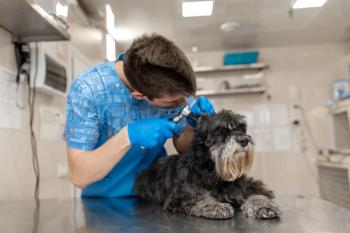
The assessment phase is critical. It includes a thorough visual examination, periodontal probing of every tooth in at least six areas, and full-mouth intraoral radiographs. Intraoral radiographs are far superior to skull radiographs, which some practices still use. While the patient is under anesthesia, all findings are carefully evaluated. The client is then contacted and informed of any problems that have been discovered.
Treatment options may include injecting hyaluronic acid into affected areas to reduce pocket depth and inflammation and support healing, locally instilled antibiotics, deep cleaning, extractions, root canal therapy, or referral to a specialist. There are many possible approaches, depending on the findings.
Finally, there is the treatment phase. In many practices, time and space constraints limit the number of cases that can be completed in a single day. When treatment is postponed or not performed, everyone loses—the patient, the client, and the practice. However, when procedures are appropriately scheduled—whether completed the same day or at a follow-up appointment—everyone benefits.
That is why COPAT represents the gold standard: it fully integrates prevention, comprehensive assessment, and appropriate treatment, ensuring complete and optimal patient care.