dvm360: What are some emergency medical conditions that AMC veterinarians see in practice with exotic animals?
Quesenberry: So rabbits, of course, the most common thing you see them for is not eating. They stopped eating or [are] not passing fecal pellets. That's a very common emergency presentation, because owners know that rabbits poop [and eat] all the time…so if they go for 12 or certainly 24 hours without doing either…it's perceived as an emergency. Those are probably one of the most common presentations for rabbits.
Guinea pigs…come in with more respiratory distress and, again, not eating…. Certainly there are other things, too, but those are very common presentations.
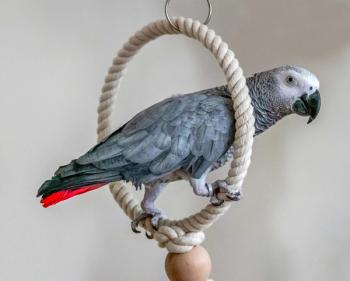
Birds, again, not eating. Egg binding is common in female birds, particularly in cockatiels, parakeets—birds that lay a lot of eggs. Backyard chickens are more common now, not so much in the city where I live [and] practice, but certainly for a lot of practitioners around the country. And again, egg binding, things like that.
As far as reptiles go, [emergencies are] probably more trauma [based]. People don't bring reptiles in on an emergency basis so much for not eating, because depending on the species, they can go a while [without] eating. So those are probably not the more common emergency presentations.
dvm360: What could be causing some of these species to not eat or poop?
Quesenberry: There are so many different causes and differences in the species I'm talking about. If you look at a mammal like a dog or cat, they are adapted, right? That's their natural state in the wild. A coyote may eat one day and not eat the next, so their system is more adapted to not eating. Whereas [if] you think of things like a bird, their metabolism is so fast that if they go for [an] extended period of time with[out] eating, they can get sick very fast. Same thing for herbivores, like rabbits and guinea pigs, that are normally out grazing all the time. If they go for a while with[out] eating, that causes physiologic changes. So it can be any number of things that causes them not to eat, but not eating, in and of itself, can be a problem after a while, [ultimately causing] metabolic problems in these species much quicker than what happen[s] in a dog or a cat.
dvm360: What are some injuries or types of trauma cases that you're seeing?
Quesenberry: I work in a major metropolitan area, so [the] things that we see are [probably] not the same as you would see across the country. The birds that we see are kept in housing or apartments. They're not out in aviary-type situations, but you can have any number of types of trauma for a caged bird. If people let them fly around their house, they can hit a ceiling fan. We have lots of birds that come in [because] they [were sitting] on the top of a door, and the owner [didn’t] know that [they were there and slammed] the door, or they even step on the bird. So those types of trauma, where the bird is out and about. Occasionally, you'll get a bird that flies into a pot of water on a stove. Those type of things [are] what you see with birds. You can also see bird-to-bird trauma. People have multiple birds. You [can] have a big bird/little bird type of trauma, where [the] big bird can bite, usually around the face or something on a little bird—on the beak or something. So you can have that conspecific aggression trauma.
Reptiles can have different types of trauma. If they're on a table, they can fall and crack their shell [or] somebody can step on them…. For lizards, a lot of times, they'll come in with tail injuries. Again, something falls on them and injures their tail. Snakes can get burn wounds if they're on a heating pad or some other heating source that's not regulated.
Probably the common source of trauma [for rabbits] is cage conspecific trauma, where people may have a couple of rabbits, and one may be more aggressive. Even though [they are often] sweet little rabbits, they can be fairly aggressive. So you can have bite wound trauma from a separate rabbit. They can always get their legs caught in something and [sustain] a fractured leg, or something like that. Most times, it's a back leg with a fractured leg. Same thing with small mammals—chinchillas, hamsters, things like that. A lot of the trauma that we see are injuries of the legs, either cage injuries—or with hamsters, a wheel injury—something like that.
Those are the main things you would [likely] see from trauma. We don't see [animals] hit by [a] car, except in the South. You probably see it by car, with the wild tortoises and things like that, but not so much in the northern part of the country, where [pets are] not around outside so much. Occasionally we do see trauma, where raccoons will get to turtles. For instance, even in New York City, raccoons will come and sometimes get a turtle that's kept outside. So you have to be careful with exposure to predators with wildlife in New York.
dvm360: Can these types of emergency cases in avian and exotic pets be handled by a general practitioner? In what instances should a general practitioner refer to someone who specializes in exotic medicine?
Quesenberry: It really depends on the knowledge base, comfort level, and expertise of the practitioner. There are a lot of practitioners out there [who] do very good medicine with exotics, and some practitioners are not at all adept. It really depends on what they feel comfortable with. I think almost any practitioner can provide initial triage, supportive care, be it with fluids [or] pain medication; if an animal is bleeding, trying to stop the bleeding. Basically, I think [most general practitioners can handle] initial triage circumstances…[and] that type of thing. If it gets the point where it's very complicated—meaning it's not clear what's going on, it's a surgical procedure our general practitioner doesn't feel comfortable with, or it requires a level of diagnostic test that the general practitioner may not have access to, such as CT, ultrasound, or something like that—then that's certainly a time to refer. If they don't feel comfortable handling the situation, they should certainly refer. If the animal is very sick and it needs very intensive care, and they can't provide 24-hour care, or at least some reasonable care overnight, then that's also a time to refer to a larger referral center that can provide that type of care and access to specialists. It could be a rabbit, and you suspect cardiac disease, and you need a cardiac ultrasound or a consult. Those are all situations where it would be better to refer.
dvm360: What are the memorable cases involving emergency situations with your patients?
Quesenberry: I've dealt with many, many cases over the years. The ones that stick out to me the most are the ones where I have had a long-term relationship with the client. Because, in some cases, these animals, especially birds, can live a very long time. Also, some reptiles can live a very long time. So I've had relationships with clients where I've taken care of their bird for 25 years. Those cases stand out to me. One case in particular I can tell you about was a blue and gold macaw that I treated for many, many years. That macaw ultimately had…2 strokes, and lived through those strokes. It ultimately developed heart disease and then died. It was over 50 [years old]….
dvm360: What else would you like other veterinary professionals to know about exotic animals or emergency cases?
Quesenberry: If you're interested in exotics, there are so many resources…. There are so many amazing conferences that you can go to, or seminars online. It's so different now than it was 30 years ago, [when] the resources were very limited. Now there are resources all over the place, and there are some amazing people doing amazing things with exotics, and the field is just expanding every day. If you're interested, I would say to just jump in and do it. Don't be afraid to do it. Then the basics of…dealing with these animals is certainly that they have their differences in physiology and anatomy, but it's a lot of the basics. You can triage in an emergency situation, you can provide fluids, you can provide pain medication. You just need a formulary to look up how to do it, and that's so available now and online. You can get that information very quickly. So I'm hoping that more people are going to feel more comfortable treating exotics and emergencies.