Help Shape the Future of Veterinary Education
|Articles|January 1, 2006

A new 401(k) option

Starting this month, 401(k) plans can offer a Roth 401(k) provision—which could be a better option for your retirement savings.

The new Roth 401(k) provision, which 401(k) plans can offer starting in January 2006, lets you save money on an after-tax basis and then build tax-free for life. You should consider Roth 401(k) plan contributions if you're younger and expect your tax bracket to increase over time.

If your tax bracket will decrease, you may still be better served with traditional 401(k) contributions—where you receive a tax deduction when you contribute to the plan and pay tax on the distributions. Unfortunately, if you expect your compensation to remain stable, the choice between these two plans is not going to be as clear cut.

Other considerations in your decision: Roth 401(k) accounts can be rolled over to Roth IRA accounts and wouldn't be subject to minimum distributions at age 701⁄2. And Roth 401(k) distributions don't impact the taxation of Social Security benefits, which retirement distributions from traditional 401(k) accounts may do.

To receive a qualified distribution from a Roth 401(k) account, it must occur five years after your first Roth 401(k) contribution. Because of this requirement, you may want to make at least one Roth 401(k) post-tax contribution as soon as the feature is available in your plan, even if you don't plan to make future Roth 401(k) contributions.

Remember, the limits for contributions to 401(k) plans for 2006 are $15,000 if you're younger than 50 and $20,000 for those who reach age 50 by Dec. 31, 2006. Before deciding which type of contribution suits you best, be sure to review your plan and tax situation with your tax advisor.


Gary I. Glassman, CPA, is a partner with Burzenski and Co. PC in New Haven, Conn., and a Veterinary Economics Editorial Advisory Board member.



Related to this article

Q&A: Caregiver burden can begin early in pet illness. Are veterinary teams equipped to support clients, and how can veterinary social workers help both parties?
Caroline Cox, LSW, MSW, and Erika Krick, VMD, DACVIM (Oncology), discuss the role of veterinary social workers in supporting clients, communicating with veterinary teams, and helping practices address the human side of veterinary care in this Q&A from an interview at the 2026 Fetch National Harbor Veterinary Conference.
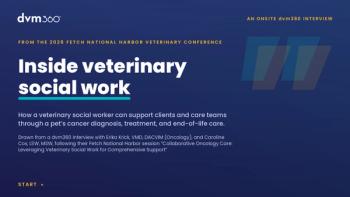
Inside veterinary social work
In a slideshow drawn from an on-site dvm360 interview at the 2026 Fetch National Harbor Veterinary Conference, a veterinary oncologist and a veterinary social worker walk through how the role supports owners and staff across a pet's cancer diagnosis, treatment, and end-of-life care.