A recently shared Pet Poison Helpline case traces how a wild mushroom eaten on a walk left a dog unable to stand within hours, and how the team treated it.
A single 220-mg tablet of naproxen can cause serious GI and kidney injury in dogs and cats, veterinary toxicologists warn.
A South Carolina dog nearly died after chewing open a bottle of naproxen while left unattended for roughly 15 minutes, a case that highlights the potentially severe consequences of even a small ingestion of the common household pain reliever.
Phaedra, an Italian mastiff, opened a drawer and chewed through a bottle of naproxen belonging to her owner’s grandmother while her owner, Jim Wren of Columbia, South Carolina, was in the shower, according to Pet Poison Helpline.1
“When I got out, I realized that Phaedra had opened a drawer with her big paws and chewed open a bottle of my grandmother’s old naproxen,” Wren said. “When I saw it was naproxen, I knew we were going straight to the veterinarian.”
Wren’s quick recognition of the medication was important. By the time Phaedra reached the veterinary clinic, blood work showed she was having renal and gastrointestinal (GI) complications.
Naproxen is a nonsteroidal anti-inflammatory drug (NSAID) sold over the counter and widely used in humans to manage osteoarthritis, inflammation, and pain. In dogs and cats, however, the drug has a very narrow margin of safety, and as little as a single 220-mg tablet can produce serious illness or death.
“Naproxen should never be given to your dog or cat,” Renee Schmid, DVM, DABT, DABVT, a senior veterinary toxicologist and director of veterinary medicine at Pet Poison Helpline, said in a news release. “Naproxen can result in severe gastrointestinal ulcers and acute kidney failure in animals, even in low doses.”
Reported signs of naproxen toxicity include abdominal pain, lack of appetite, weakness, vomiting, pale gums, lethargy, bloody stools, diarrhea, and increased drinking and urination associated with kidney failure.
At Four Paws Animal Clinic in Columbia, blood work showed that Phaedra had developed kidney injury that was progressing. She was also anemic, likely because of GI bleeding, according to Pet Poison Helpline. The veterinary team consulted a toxicologist at the organization about the expected ingestion, Phaedra’s clinical signs, and her laboratory findings.
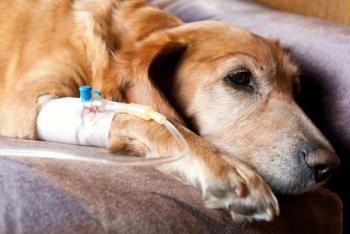
The toxicologist recommended aggressive supportive care, including intravenous fluids to support kidney recovery, medications to protect the GI tract, and an antiemetic to control vomiting. The veterinary team also closely monitored Phaedra’s red blood cell count and kidney values because a blood transfusion might have been necessary, according to Pet Poison Helpline.
Phaedra ultimately responded to treatment and recovered, the organization reported.
“When we got to the hospital, the veterinarian initially thought Phaedra wouldn't make it,” Wren said.1 “She was going into renal failure, and I told him let's do everything we can do. It all but killed her. All I could do was be with her.”
Wren monitored Phaedra at home over the following 3 weeks, returning to the clinic for additional blood tests and treatment. According to Pet Poison Helpline, Phaedra was placed on a special diet and sent home with medications. She has since returned to full health.
Knowing the specific medication and, if possible, the amount ingested can help guide treatment. Dogs and cats that may have ingested naproxen or another NSAID should be evaluated promptly by a veterinarian or animal poison control service. Early intervention can be important because GI and kidney injury may develop before severe clinical signs are apparent.
Reference
Relaxing shower turns to puppy panic. News release. Pet Poison Helpline. Accessed September 9, 2026.