Building a healthier tomorrow for dogs
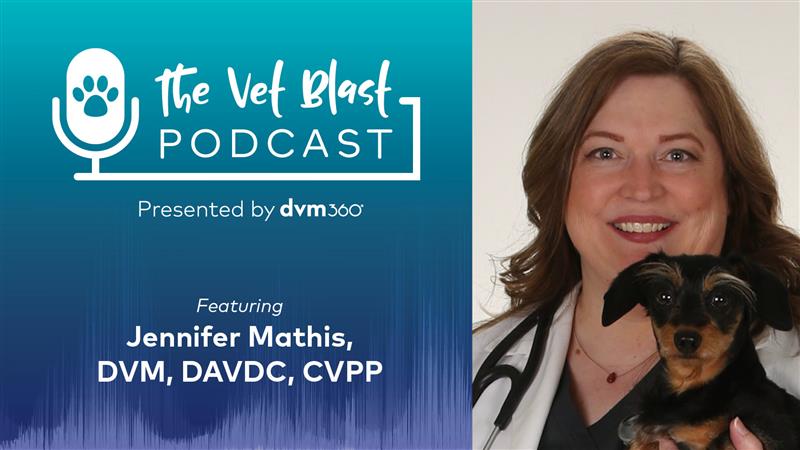
Stephanie Montgomery, DVM, PhD, DACVP, discusses how the donor-funded AKC Canine Health Foundation supports research and the veterinary profession, the role of breed clubs, and new studies on aging and liver disease in this episode of The Vet Blast Podcast presented by dvm360.
The AKC Canine Health Foundation (CHF) has funded $80 million in canine health research without pharmaceutical or federal dollars, relying entirely on donations from people who care about dogs. As research funding shifts, the foundation saw 25% more grant applications in the past year.
In this episode of The Vet Blast Podcast, host Adam Christman, DVM, MBA, talks with Stephanie Montgomery, DVM, PhD, DACVP, chief executive officer, CHF. Montgomery explains how the foundation selects and funds research, recognizes outstanding work through its Canine Health Discovery of the Year award, and supports the next generation of researchers through young investigator programs and residencies in theriogenology and sports medicine. She also discusses the major role breed clubs play in advancing research and highlights studies she is particularly excited about, including efforts to establish new standards for canine cognitive dysfunction syndrome, research into copper-associated hepatopathy, and work on canine schistosomiasis.
Below is a partial transcript, edited lightly for clarity.
Adam Christman, DVM, MBA: For those that don't know who the Canine Health Foundation is, help us explain what that is and how you work.
Stephanie Montgomery, DVM, PhD, DACVP: Sure. We're a charity, a nonprofit. We're an affiliate of the American Kennel Club, meaning that they founded us. They're our biggest supporter, but we do function separately from them. We have a different mission, and we are a funder of canine health research, so in some ways, we're an administrator. We want to bring in the best science and make sure the best people to do it are doing it, and that that science gets carried out. But we also need to fundraise, so we're completely funded by people who are passionate about dogs, and I think that's really amazing when you think about all the places that do medical research because of either pharma or federal funds. It's a mission that is only alive because people believe in a healthier tomorrow for dogs.
Adam Christman, DVM, MBA: So, $80 million in research, $3 million last year, supported 100% by donations. How have the changes in the research funding landscape affected CHF? I'm sure it can be tough, and there's been a spike in grant applications. What does that look like?
Stephanie Montgomery, DVM, PhD, DACVP: Certainly things are changing in how grants are funded and science is happening these days. In the last year alone, we saw 25% more applications come in. Probably the most challenging thing for us is that there's a lot of good work that we want to fund. So yes, it's a 25% spike, but it means there's more good stuff for us to fund and for dogs. So that's really exciting.
Adam Christman, DVM, MBA: What are some examples of research programs out there?
Stephanie Montgomery, DVM, PhD, DACVP: The way we work is we fund all areas of canine health research, and there's close to 30 areas. So anything from cardiology, oncology, ophthalmology, theriogenology—we've got it all. But we also try to stay responsive to new things coming up in veterinary medicine. So this year we declared aging as a new area of funding. I'm sure you understand as well the importance of how our dogs age—not only their lifespan but their health span—and making sure that we're putting money into research that is increasing both the lifespan and the health span of the dogs that live with us.