Sea You at Fetch Long Beach
|Videos|May 8, 2023

Brief review of pain pathways

DIVM Miami

In this dvm360® interview, Dr Bryce Dooley explains the pain pathways to help veterinary professionals brush up on their knowledge

In a dvm360® interview, Bryce Dooley, DVM, MS, DACAA, faculty for the Directions in Veterinary Medicine (DIVM) symposium in Miami, Florida, reviews how pain pathways work, plus shares veterinary therapies that can help patients feel more comfortable.

Register today for the Directions in Veterinary Medicine symposium in Miami, Florida taking place May 19-20, 2023.

The following is a partial transcript of the video.

Bryce Dooley, DVM, MS, DACAA: The pain pathway, all of it is designed to warn our body of an impending injury. And so we have all these nerve endings in our skin, in our muscle that really keep us in tune what's happening in the external environment. And not all of these nerve endings are to transmit pain signals, right, some transmit touch, vibration, gentle pressures, but we have these nociceptors, primarily A delta and C fibers in our periphery.

Check out another video interview featuring Dr Dooley discussing the benefits and drawbacks of NSAIDs.


Related to this article

Q&A: Caregiver burden can begin early in pet illness. Are veterinary teams equipped to support clients, and how can veterinary social workers help both parties?
Caroline Cox, LSW, MSW, and Erika Krick, VMD, DACVIM (Oncology), discuss the role of veterinary social workers in supporting clients, communicating with veterinary teams, and helping practices address the human side of veterinary care in this Q&A from an interview at the 2026 Fetch National Harbor Veterinary Conference.
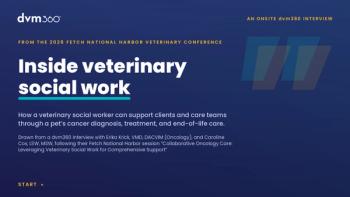
Inside veterinary social work
In a slideshow drawn from an on-site dvm360 interview at the 2026 Fetch National Harbor Veterinary Conference, a veterinary oncologist and a veterinary social worker walk through how the role supports owners and staff across a pet's cancer diagnosis, treatment, and end-of-life care.