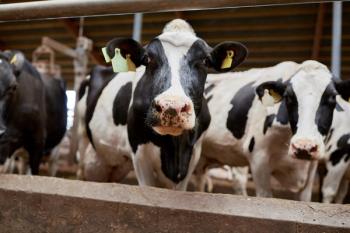
Two herds tested positive after cattle showed signs of illness, marking the state’s first confirmed livestock cases.
An atypical presentation of the virus led to internal bleeding, anemia, and sepsis in the famous bald eagle whose illness had puzzled her care team for weeks.
Highly pathogenic avian influenza (HPAI) was the primary underlying cause of death for Jackie, a bald eagle known to viewers of a livestream from Big Bear Valley in California, according to necropsy and diagnostic findings released October 14 by the California Department of Fish and Wildlife (CDFW).1 For more than a decade, viewers around the world followed Jackie and her mate, Shadow, as they nested and raised eaglets.
Jackie, who was about 14 years old,
“Jackie's necropsy confirmed… HPAI as the primary underlying cause of her decline,” Steve Kubiski, DVM, PhD, DACVP, director of disease investigations at the alliance, said in a statement released by CDFW. The infection caused an unusual complication: a severe stomach ulcer that led to persistent internal bleeding, anemia and bacterial sepsis, he said.1
Pathologists found chronic disease in Jackie's ventriculus, the muscular portion of a bird's stomach commonly known as the gizzard. The ulcerated tissue caused ongoing blood loss and severe anemia and provided a pathway for bacteria to enter her body, resulting in a secondary infection, according to CDFW. Testing also revealed severe inflammation and blood clots in her heart and several major blood vessels. HPAI genetic material was detected in multiple tissues, including the ulcerated ventriculus.1
Additional testing ruled out West Nile virus. Heavy metal levels, including lead, were within acceptable limits and were not considered a factor in the progression of her illness, CDFW said.
Toxicology screening detected brodifacoum, an anticoagulant rodenticide, in Jackie's liver, along with persistent environmental contaminants. However, the necropsy did not reveal the uncontrolled bleeding typically associated with anticoagulant rodenticide exposure. CDFW therefore did not identify brodifacoum as the primary cause of her illness or death. The USDA National Veterinary Services Laboratories provided final confirmation of the HPAI infection, according to the agency.
CDFW said the findings indicated that several severe, interconnected disease processes developed over time and ultimately led to Jackie's death.
During Jackie's hospitalization, clinicians at the Ojai Raptor Center investigated several possible causes of her illness, including lead poisoning, zinc toxicity, rodenticide poisoning, and cancer. She also received a blood transfusion, USA Today reported.2
The HPAI diagnosis came as a surprise because Jackie did not exhibit the clinical signs typically associated with the infection in eagles, and no active outbreak had been reported in the area, William Bowerman, a professor of wildlife ecology and environmental toxicology at the University of Maryland, told USA Today.2
Chris Eksteen, MEd, executive director of the Ojai Raptor Center, said the necropsy findings helped explain observations the team made during Jackie's treatment, according to the CDFW release.1
HPAI continues to circulate in wild bird populations across the United States, according to CDFW. Waterfowl and shorebirds are natural hosts of avian influenza viruses, while eagles and other raptors can be exposed through contact with infected birds or by eating infected prey, the agency said.1
Bald eagles feed largely on fish and waterfowl. Waterfowl can carry avian influenza viruses without showing signs of illness, increasing the risk that predators will consume infected birds, according to the National Park Service. Eagles may also eat sick birds or recently dead carcasses, providing another route of exposure.3
The US Fish and Wildlife Service's National Eagle Repository cremated Jackie's remains under established procedures intended to prevent the spread of HPAI to wildlife and humans. CDFW said camera footage provided no evidence that Shadow or the pair's eaglets were ill.1
“Jackie’s death also marked the loss of one half of the iconic bald eagle pair that has occupied Big Bear Valley for years. Her mate, Shadow, remains in Big Bear. Based on camera data, we have no evidence that Shadow or the eaglets were sick,” CDFW wrote in its announcement.1
The nonprofit Friends of Big Bear Valley installed the nest camera in 2015. Bald eagle populations in the United States rebounded after the pesticide DDT was banned in the 1970s and other protections were implemented, allowing the species to be removed from the federal endangered species list.4
References