Sea You at Fetch Long Beach
|Articles|September 12, 2010

University of Illinois veterinary researchers find success with lymphoma treatment

Champaign, Ill. -- A new drug designed to treat lymphoma targets a specific cellular enzyme and has shown positive effects in four dogs.

Champaign, Ill.

-- Researchers at the University of Illinois have identified a new compound that, when targeting a specific cellular enzyme, can help fight lymphoma in dogs.

At low doses, the drug, called S-PAC-1, stunted tumor growth in three of six dogs tested and induced partial remission in a fourth. The results appear in this month's issue of Cancer Research.

The compound targets the procaspase-3 enzyme, which, when activated, emits a barrage of reactions that kill the cell, according to chemistry professor Paul Hergenrother, who co-led the study with Dr. Tim Fan, a professor of veterinary clinical medicine at the University of Illinois. According to Hergenrother, many tumors—including those found in lymphoma, lung cancer and breast cancer—contain high levels of procaspase-3.

If approved by the FDA as an effective and safe lymphoma treatment, S-PAC-1 could help fight cancer in both dogs and humans—though the approval process could take years, the researchers say. The drug showed mild side effects during the trials, and these effects were minimized or eliminated with recent adjustments to the treatment protocol, the researchers say.

What's next? A clinical trial of S=PAC-1 in companion animal dogs is being supported by a $525,000 grant from the National Cancer Institute at the National Institutes of Health.


Related to this article

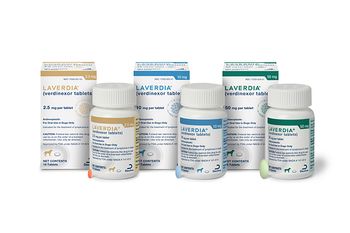
Laverdia now available for purchase for dogs with lymphoma
Verdinexor tablets are now available for dogs with lymphoma after receiving full FDA approval earlier this year, offering an at-home treatment option that is given twice weekly and showed a longer time to disease progression than control in a field study.
Q&A: Caregiver burden can begin early in pet illness. Are veterinary teams equipped to support clients, and how can veterinary social workers help both parties?
Caroline Cox, LSW, MSW, and Erika Krick, VMD, DACVIM (Oncology), discuss the role of veterinary social workers in supporting clients, communicating with veterinary teams, and helping practices address the human side of veterinary care in this Q&A from an interview at the 2026 Fetch National Harbor Veterinary Conference.
Inside veterinary social work
In a slideshow drawn from an on-site dvm360 interview at the 2026 Fetch National Harbor Veterinary Conference, a veterinary oncologist and a veterinary social worker walk through how the role supports owners and staff across a pet's cancer diagnosis, treatment, and end-of-life care.