Christopher Lee, DVM, explains Toxoplasma gondii facts: why most indoor cats rarely shed, plus pregnancy-safe litter tips for cat health
A quick step-by-step to performing this procedure.
1. Mix about 2 to 5 g of feces with 10 ml flotation solution, and pour the mixture through a tea strainer into a cup. For ease of cleaning, the tea strainer can be lined with a 4-x-4-in gauze square.
2. Pour the strained solution into a 15-ml centrifuge tube.
3. Centrifuge at 1,200 rpm (280 g) for five minutes.
4. Insert the tip of a disposable pipette below the surface of the mixture, and add fresh flotation solution until a slightly inverted positive (rounded) meniscus forms. Take care not to overfill the tube since this may result in loss of floated eggs when the coverslip is placed (next step).
5. Place the coverslip on top of the tube, and let the sample stand for 10 minutes.
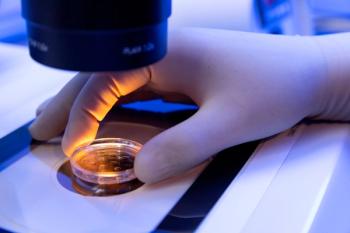
6. Remove the coverslip and place it, liquid side down, on a glass slide.
7. Systematically examine the entire area under the coverslip at 10X magnification. The 40X objective lens can be used to confirm a diagnosis.