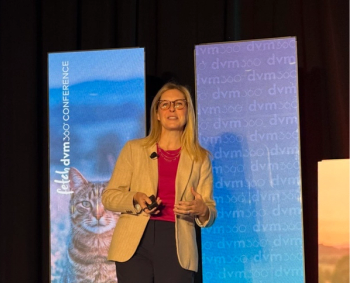
Leilani Alvarez, DVM, DACVSMR, director of integrative and rehabilitative medicine at the Schwarzman Animal Medical Center, in New York City, New York, discusses effective therapies for neurologic recovery in pets. She highlights innovative modalities like pulsed electromagnetic field therapy and extracorporeal shockwave therapy while offering empowering advice for veterinarians treating non-ambulatory patients.
Transcript
Leilani Alvarez, DVM, DACVSMR: Hi, I'm Dr Leilani Alvarez. I'm the director of integrative and rehabilitative medicine at the Schwarzman Animal Medical Center in New York City.
For neurologic patients, there are several modalities that can be really helpful to improve their recovery. Probably my favorites are pulsed electromagnetic field therapy. I actually did a study on this at the Animal Medical Center, and what it's shown to be particularly helpful for is reducing the use of pain medications, particularly when the patients are going home. It's really great for improving pain management in dogs with back pain.
Another modality that I really like to use, especially for lumbosacral (LS) disease, is extracorporeal shockwave therapy. There’s now a non-sedated probe available, which is an electrohydraulic machine called the PulseVet, and I find that it's very well-tolerated for my LS patients.
You can also use laser therapy, although the latest studies show that you should shave the area to get good penetration. Some people don’t like to shave their pets, but lasering over the painful area in the back can still be a great modality.
A lot of vets who see non-ambulatory neurologic patients, especially, can feel really overwhelmed. These cases can seem daunting because the patients may appear to have a poor prognosis. Owners are often very stressed when their dogs lose the ability to walk, and I find that many veterinarians would prefer to refer those patients rather than treat them themselves.
However, in my lecture today, I focused on empowering veterinarians to implement simple strategies that can make a big difference in improving the recovery of neurologic patients. These patients can, surprisingly, do really, really well. Owners are often absolutely over the moon, delighted with their pet's recovery, and you’ll have the most loyal clients when you help a dog recover from a severe spinal cord injury.