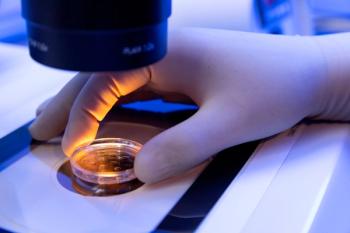
Preclinical testing at The Ohio State University found Telomir-Zn inhibited growth of canine and human osteosarcoma cell lines, prompting the company to explore a possible in-vivo study in dogs with naturally occurring tumors.
I routinely place intravenous (IV) catheters when owners are present for a pet's euthanasia.
I routinely place intravenous (IV) catheters when owners are present for a pet's euthanasia. With an IV catheter in place, clients don't have to be moved away from a pet to allow a technician and me to perform the mandatory venipuncture. If an animal has an IV catheter in place for several days before the decision to euthanize is made, some phlebitis will typically be present. Because of this inflammation, euthanasia solutions can be irritating when administered, and the animal may exhibit some discomfort. Instead of placing a new IV catheter in a different vein, for comfort reasons I typically administer a very slow infusion of a dilute lidocaine mixture (one part 2% lidocaine and three parts of an isotonic crystalloid) at the low end of the dose range for each species shortly before the euthanasia is performed. This injection desensitizes the vein proximal to the catheter tip for up to two hours. I have not had a patient object to the euthanasia solution when I use this technique.
Dr. Todd Duffy, DACVECC
Madison, Wis.