Use this handout to show clients this should not be the first training method of choice.
Dr. Tynes owns Premier Veterinary Behavior Consulting in Sweetwater, Texas.
Use this handout to show clients this should not be the first training method of choice.
Use this handout to explain the effects of fearand how your veterinary practice works to reduce pets fear.
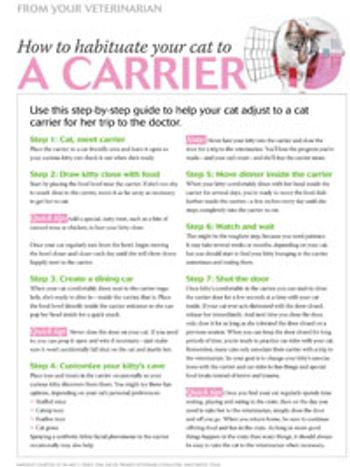
Use this step-by-step guide to educate cat owners about how to help their cats adjust to a cat carrier for trips to the veterinarian.
This handout gives pet owners tips to successfully train their dog to eliminate in an acceptable location.

Dr. Valarie Tynes helps with a case of a destructive dog.

Dr. Valarie Tynes tackles this challenging behavior case.

Debunk these 10 behavior myths in your practice.
Do your clients hold some of these misconceptions when it comes to dog behavior?

Dr. Valarie Tynes has advice for resisting those begging eyes.

Dr. Valarie Tynes helps a client with a dog that has an unusual habit when visiting friends.
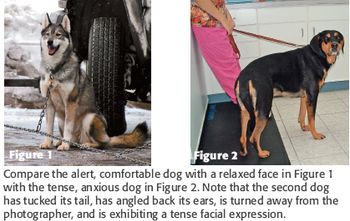
Canine body language isn't necessarily easy to read.

Veterinary behaviorist Valarie Tynes gives her perspective on this important topic.
For advice on finding a behavior expert, check out these sources.

Have some of your clients-or even you-voiced any of these misconceptions? Now you'll know how to respond in order to protect pets and bond clients to your practice.
Great resources are available for those particularly challenging behavior cases.
This thinking inappropriately lays the blame for fearful behavior on others.
Reference list for the article "4 life-threatening behavior myths."
Q: A client told me that when he holds his pet bird in his hand and it bites, he corrects the bird by flinging it off his hand and onto the floor. What should I advise this client as far as this method of correcting the bird?
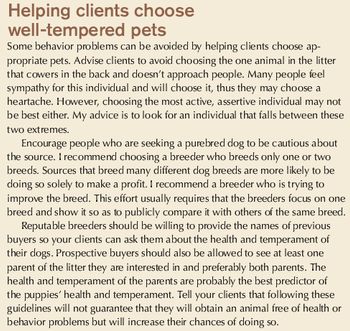
In this article, I discuss 10 common myths about animal, particularly canine, behavior--misconceptions that may increase the likelihood that a pet will develop a behavior problem and, thus, can lead to the pet's abandonment or euthanasia.
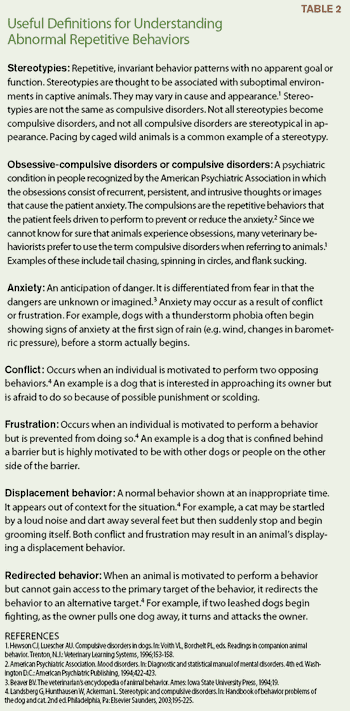
A dog's constant, repetitive licking of objects or surfaces is a problem whose frequency is difficult to determine. This licking may occur often, but because it seems harmless and may only be somewhat annoying, many owners accept this unusual behavior or simply ignore it. However, some owners will inquire about it during a routine checkup and ask for advice.
A well-housetrained dog is a requirement for most pet owners. In fact, behavior problems are a common cause of relinquishment to animal shelters, and inappropriate elimination has been reported to make up 15% to 24% of the behavior problems seen in veterinary behavior clinics.
You can easily teach your dog to eliminate in an acceptable location by keeping a close eye, recognizing his signals, understanding his instincts, and rewarding his appropriate behavior.

May 1st 2010
June 1st 2010

August 22nd 2011