Today is Global Cat Day—a day for people around the world to stand up for policies that protect all cats in their communities. Global Cat Day is taking the place of National Feral Cat Day, which was initiated by Alley Cat Allies, a global engine of change for cats, in 2001. This campaign is racing toward a goal of 100,000 people signing a pledge to support advocacy efforts for all cats, including cats who call the outdoors their home.
In support this this day, we've compiled videos we took with Audra Farrell, Community Cares supervisor for the San Francisco SPCA, regarding all her organization has done for feral cats. Learn how you can help—both as a veterinarian and as a member of your community—to protect and care for all cats living outside.
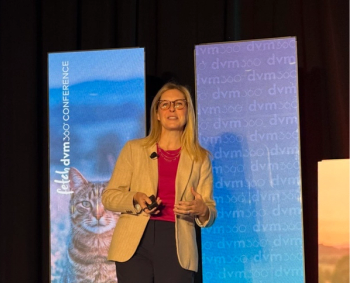
In a keynote address at the 2026 Fetch National Harbor Veterinary Conference, Jessica Pritchard, VMD, MS, DACVIM (SAIM), shared research showing that many owners decline vaccines because they do not think their pet needs them, and discussed ways veterinary teams can address those concerns.
Alyssa Mages, BS, CVT, FVTE, outlines key considerations for veterinary technicians during triage, from rapid patient assessment and prioritization to client communication and team coordination, in this interview from the Fetch National Harbor Veterinary Conference.
In a session at the 2026 Fetch National Harbor conference, Nathanael Oster, VMD, MBA, walked attendees through the biology, diagnosis, and treatment of the flea tapeworm in dogs and cats, including why cats are affected more often than dogs.
SNAP-P is a proposed high-impact program that would provide at least $4.4 billion in benefits to low-income pet owners at marginal cost to federal and state governments.
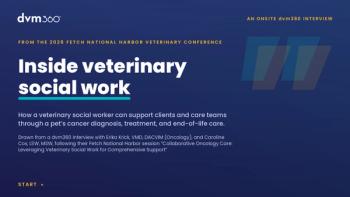
In a slideshow drawn from an onsite dvm360 interview at Fetch National Harbor, a veterinary oncologist and a veterinary social worker walk through how the role supports owners and staff across a pet's cancer diagnosis, treatment, and end-of-life care.
The five-year Big Bet for Pets initiative targets what the foundation calls a care gap affecting 50 million dogs and cats in the US, opening two new grant programs for nonprofit veterinary clinics.
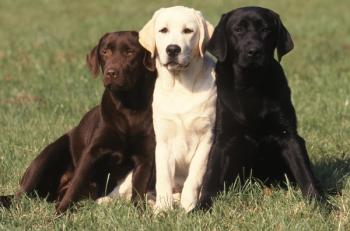
A UC Davis study is investigating why Labrador retrievers develop copper-associated hepatopathy and whether blood-based tools could help identify the disease before serious liver damage occurs.