Sea You at Fetch Long Beach
News|Articles|June 1, 2008

Does a team member on mood medication need a doctor's note?

Can I question my employee who's revealed a history of mental illness and prescribed medications to control it?

Q: If an employee tells me he's taking medication for anxiety and depression, am I allowed to request a note from the prescribing physician stating that this employee is able to perform his duties?

Yes, you can ask for that note, says Dr. Karl Salzsieder, JD, of Salzsieder Consulting and Legal Services in Longview, Wash. The Americans With Disabilities Act (ADA) will require you to make "reasonable accommodations" for this employee to limit his job requirements or work schedule or to provide him with some other aid that allows him to perform his job.

The employee's revelation is also a reminder for you to ask those big questions from the Drug Enforcement Agency (DEA). If a person will be working with controlled substances, you should already be asking about crime and drug use: Within the past five years, have you been convicted of a felony, or within the past two years, of any misdemeanor, or are you presently formally charged with committing a criminal offense? And in the past three years, have you ever knowingly used any narcotics, amphetamines, or barbiturates other than those prescribed to you by a physician?

You're responsible for this particular employee's well-being at work as well as the safety of other staff. You're also responsible for the veterinarians who are licensed with the DEA and need to be accountable for controlled substances. "Don't forget that the DEA provides for employee screening and testing, even in the interview process," Salzsieder says.

Visit Related Links below for a refresher on DEA law relating to hiring.


Related to this article

Q&A: Caregiver burden can begin early in pet illness. Are veterinary teams equipped to support clients, and how can veterinary social workers help both parties?
Caroline Cox, LSW, MSW, and Erika Krick, VMD, DACVIM (Oncology), discuss the role of veterinary social workers in supporting clients, communicating with veterinary teams, and helping practices address the human side of veterinary care in this Q&A from an interview at the 2026 Fetch National Harbor Veterinary Conference.
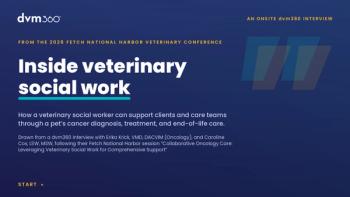
Inside veterinary social work
In a slideshow drawn from an on-site dvm360 interview at the 2026 Fetch National Harbor Veterinary Conference, a veterinary oncologist and a veterinary social worker walk through how the role supports owners and staff across a pet's cancer diagnosis, treatment, and end-of-life care.